- English
- Español
- Português
- русский
- Français
- 日本語
- Deutsch
- tiếng Việt
- Italiano
- Nederlands
- ภาษาไทย
- Polski
- 한국어
- Svenska
- magyar
- Malay
- বাংলা ভাষার
- Dansk
- Suomi
- हिन्दी
- Pilipino
- Türkçe
- Gaeilge
- العربية
- Indonesia
- Norsk
- تمل
- český
- ελληνικά
- український
- Javanese
- فارسی
- தமிழ்
- తెలుగు
- नेपाली
- Burmese
- български
- ລາວ
- Latine
- Қазақша
- Euskal
- Azərbaycan
- Slovenský jazyk
- Македонски
- Lietuvos
- Eesti Keel
- Română
- Slovenski
- मराठी
- Srpski језик

How Does a Rear-wheel Drive EV Pickup Deliver Performance and Efficiency?
Abstract
Rear-wheel drive electric pickups are rapidly gaining attention among both commercial operators and lifestyle users. By combining electric propulsion with a traditional rear-wheel drivetrain layout, these vehicles offer a unique balance of torque delivery, efficiency, and cost optimization. This article explores how a rear-wheel drive EV pickup works, why it matters, and how it solves common buyer concerns such as range anxiety, payload capability, and maintenance complexity. With insights from industry practices and the manufacturing perspective of HeRun, this guide provides a comprehensive understanding for informed decision-making.
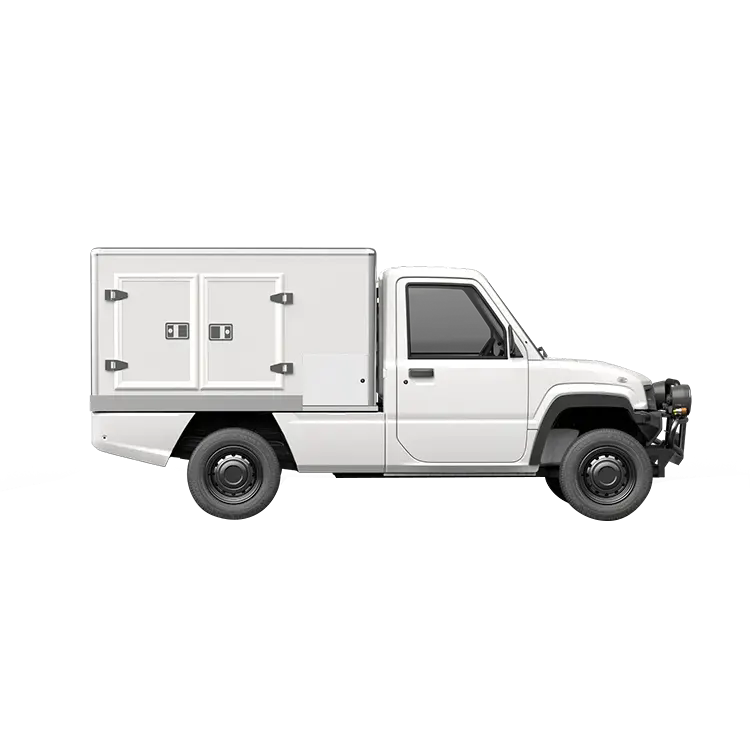
Table of Contents
- 1. What Is a Rear-wheel Drive EV Pickup?
- 2. How Rear-wheel Drive Systems Work in EV Pickups
- 3. Key Benefits for Real-world Applications
- 4. Comparison Table: RWD vs AWD vs FWD EV Pickups
- 5. Common Buyer Pain Points and Solutions
- 6. Use Cases: Who Should Choose RWD EV Pickups?
- 7. Design and Engineering Considerations
- 8. Maintenance and Cost Advantages
- 9. Future Trends in RWD Electric Pickups
- 10. FAQ
1. What Is a Rear-wheel Drive EV Pickup?
A rear-wheel drive EV pickup is an electric truck where the electric motor transmits power exclusively to the rear wheels. Unlike internal combustion pickups that rely on complex transmission systems, EV pickups simplify drivetrain architecture by using electric motors and direct drive systems.
This configuration is particularly popular in entry-level and mid-range electric pickups because it strikes a practical balance between cost, efficiency, and utility performance.
2. How Rear-wheel Drive Systems Work in EV Pickups
In a rear-wheel drive EV pickup, the electric motor is typically mounted near the rear axle. Power is delivered instantly to the rear wheels through a reduction gear system. The absence of a traditional gearbox allows smoother acceleration and improved energy efficiency.
- Electric motor generates torque instantly
- Power flows through a single-speed transmission
- Rear axle distributes torque to both wheels
- Regenerative braking recovers energy during deceleration
This streamlined system reduces mechanical losses and enhances reliability compared to traditional drivetrains.
3. Key Benefits for Real-world Applications
Rear-wheel drive EV pickups are engineered to address real-world usage challenges. Whether for logistics, agriculture, or urban transport, they offer several operational advantages:
- Improved Load Handling: Weight distribution over the rear axle enhances traction when carrying cargo.
- Better Efficiency: Fewer drivetrain components mean lower energy loss.
- Cost-effectiveness: Simpler design reduces manufacturing and purchase costs.
- Durability: Reduced mechanical complexity leads to fewer points of failure.
4. Comparison Table: RWD vs AWD vs FWD EV Pickups
| Feature | Rear-wheel Drive | All-wheel Drive | Front-wheel Drive |
|---|---|---|---|
| Cost | Lower | Higher | Moderate |
| Efficiency | High | Moderate | High |
| Traction (Loaded) | Excellent | Best | Limited |
| Maintenance | Low | Higher | Low |
| Complexity | Simple | Complex | Simple |
5. Common Buyer Pain Points and Solutions
Range Anxiety
Rear-wheel drive EV pickups often provide longer range due to reduced drivetrain energy consumption. Efficient power delivery ensures optimal battery usage.
Payload Concerns
With the motor positioned near the rear axle, these vehicles naturally support heavier loads without compromising traction.
Charging Infrastructure
Modern EV pickups are compatible with fast-charging networks, reducing downtime significantly.
Initial Cost
Compared to AWD systems, RWD configurations are more affordable, making them ideal for budget-conscious buyers and fleet operators.
6. Use Cases: Who Should Choose RWD EV Pickups?
- Urban delivery services requiring efficiency and maneuverability
- Small businesses focused on cost control
- Agricultural users needing reliable load transport
- Fleet operators optimizing total cost of ownership
Manufacturers like HeRun are actively developing rear-wheel drive EV pickups tailored to these scenarios, focusing on durability and practical performance.
7. Design and Engineering Considerations
Designing a rear-wheel drive EV pickup involves several technical priorities:
- Battery placement for optimal weight distribution
- Thermal management systems for motor efficiency
- Chassis reinforcement for payload capacity
- Software calibration for torque control and stability
These elements ensure the vehicle performs reliably under demanding conditions.
8. Maintenance and Cost Advantages
One of the strongest advantages of rear-wheel drive EV pickups lies in reduced maintenance requirements:
- No engine oil changes
- Fewer moving parts
- Reduced brake wear due to regenerative braking
- Lower long-term servicing costs
For businesses, this translates into higher uptime and improved operational efficiency.
9. Future Trends in RWD Electric Pickups
The future of rear-wheel drive EV pickups is shaped by advancements in battery technology, lightweight materials, and intelligent control systems. Innovations such as improved lithium battery density and AI-driven energy management are expected to further enhance range and performance.
Companies like HeRun are continuously investing in these technologies to deliver next-generation electric pickups that meet evolving market demands.
10. FAQ
Is a rear-wheel drive EV pickup suitable for heavy loads?
Yes, rear-wheel drive systems are particularly effective for load-bearing applications due to better weight distribution over the drive axle.
How does it compare to AWD in daily use?
For most daily and commercial uses, RWD offers sufficient performance with better efficiency and lower cost.
Are maintenance costs really lower?
Yes, fewer mechanical components and simplified systems significantly reduce maintenance requirements.
Is it good for long-distance driving?
Absolutely. With efficient energy usage and expanding charging networks, RWD EV pickups are increasingly viable for long-distance travel.
Conclusion
Rear-wheel drive EV pickups represent a practical and forward-looking solution for both commercial and personal transportation needs. By combining efficiency, durability, and cost advantages, they address many of the challenges faced by modern vehicle buyers. As innovation continues, their role in the electric mobility ecosystem will only grow stronger.
If you are exploring reliable and cost-effective electric pickup solutions, HeRun offers advanced rear-wheel drive EV pickup options tailored to real-world applications. For detailed specifications, customization options, or business inquiries, contact us today to discover how we can support your electric mobility goals.