- English
- Español
- Português
- русский
- Français
- 日本語
- Deutsch
- tiếng Việt
- Italiano
- Nederlands
- ภาษาไทย
- Polski
- 한국어
- Svenska
- magyar
- Malay
- বাংলা ভাষার
- Dansk
- Suomi
- हिन्दी
- Pilipino
- Türkçe
- Gaeilge
- العربية
- Indonesia
- Norsk
- تمل
- český
- ελληνικά
- український
- Javanese
- فارسی
- தமிழ்
- తెలుగు
- नेपाली
- Burmese
- български
- ລາວ
- Latine
- Қазақша
- Euskal
- Azərbaycan
- Slovenský jazyk
- Македонски
- Lietuvos
- Eesti Keel
- Română
- Slovenski
- मराठी
- Srpski језик

How Can XR Light EV Pickup Truck Redefine Efficiency and Versatility in the Electric Utility Market?
The XR Light EV Pickup Truck represents a new class of lightweight electric utility vehicles engineered for businesses, contractors, and operators seeking efficiency, reduced operating costs, and sustainable mobility. This vehicle combines a compact architecture with a high-output electric powertrain, delivering strong load-bearing capacity, agile maneuverability, and significant range performance tailored for urban, suburban, and light-industrial applications.
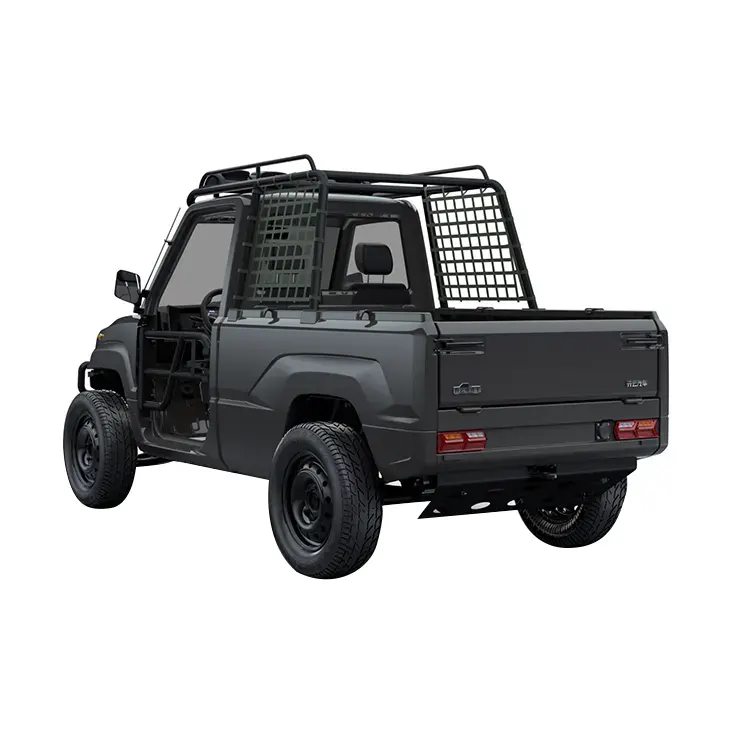
Below is a consolidated technical specification overview of the XR Light EV Pickup Truck to support informed evaluation:
| Parameter | Specification |
|---|---|
| Vehicle Type | Lightweight Electric Pickup Truck |
| Overall Dimensions | 3990 × 1475 × 1900 mm |
| Wheelbase | 1800 mm |
| Curb Weight | 760 kg |
| Maximum Payload | 500–800 kg (depending on configuration) |
| Battery Options | 72V 100Ah to 72V 200Ah lithium platform |
| Motor Output | 7.5 kW rated, peak output up to 15 kW |
| Battery Range | 90–180 km per full charge |
| Charging Method | Standard AC charging, 6–8 hours |
| Drive System | Rear-wheel electric drive |
| Max Speed | 45–55 km/h (market-dependent settings) |
| Gradeability | 20–25% |
| Chassis Structure | Reinforced steel frame with anti-corrosion treatment |
| Cargo Bed Type | Open flatbed or enclosed cargo box |
| Steering System | Electric power steering |
| Braking System | Hydraulic front disc + rear drum |
This specification forms the basis for analyzing how the XR Light EV Pickup Truck fits into evolving operational environments and where it may deliver measurable performance advantages.
How Does a Lightweight EV Pickup Improve Operational Efficiency for Urban and Commercial Fleets?
A core value proposition of the XR Light EV Pickup Truck is its alignment with modern commercial requirements: reduced operational cost, flexible deployment, and compliance with low-emission regulations. As urban centers across global markets tighten environmental restrictions, fleets are actively transitioning to electric powertrains to avoid fuel volatility, noise restrictions, and emissions penalties.
Streamlined Fleet Costs
Electric powertrains significantly reduce energy spending per kilometer, particularly in short-distance, high-frequency usage such as municipal services, campus operations, last-mile delivery, and industrial logistics. Electricity cost per unit of mileage is substantially lower than gasoline or diesel in dense cities, enabling organizations to scale vehicle utilization without proportionally scaling fuel expenditure.
Additionally, drivetrain simplicity contributes to longer intervals between maintenance cycles. Electric motors contain fewer mechanical components, leading to reduced downtime, fewer consumables, and extended operating life for core systems such as braking and steering.
Design Alignment with Urban Routes
The compact external dimensions (3990 mm in length) and narrow chassis profile facilitate sharp turning radiuses and stress-free navigation through alleys, loading zones, crowded campuses, and warehouse corridors. This enables operators to accomplish tasks that larger pickup trucks or vans struggle with due to space restrictions.
Payload capabilities between 500 and 800 kg allow light-commercial users to carry equipment, supplies, or packaged goods at scale, ensuring the vehicle remains operationally competitive with internal combustion alternatives in its class.
Standardized Charging for Simplified Infrastructure
The availability of a 72V lithium battery platform supports rapid scalability of charging infrastructure. Existing 220V AC connections in depots, workshops, or storage areas can recharge the vehicle in 6–8 hours. The ability to adopt larger battery capacities (up to 200Ah) supports extended work shifts or routes without requiring mid-day charging breaks.
How Does the XR Light EV Pickup Truck Compare to Traditional Fuel-Powered Light Utility Trucks?
Comparing electric and fuel-powered utility vehicles reveals distinct differences in lifecycle economics, usability, regulatory compliance, and long-term value retention.
Energy Consumption and Performance Profile
Conventional trucks rely on internal combustion engines that require frequent servicing, fuel filtration, exhaust management, and lubrication. These mechanical dependencies result in a higher cost of ownership and increased environmental impact. By contrast, the XR Light EV Pickup Truck features a highly efficient electric motor with consistent torque output, making acceleration smooth and predictable even under load.
Electric drivetrains deliver full torque at zero RPM, allowing rapid start-stop performance in congested environments where combustion engines often lag due to gear transitions or turbo lag. This responsiveness improves operational productivity in delivery and maintenance sectors.
Regulatory Flexibility
Jurisdictions with clean-energy mandates frequently impose access limitations on fossil-fuel vehicles. Electric pickups are exempt from such constraints, ensuring unrestricted operation in low-emission zones, residential districts, university campuses, business parks, and logistics hubs.
This exemption can directly influence routing flexibility and service delivery timeframes, reducing the need for fleet operators to maintain multiple vehicle classes for different regulatory environments.
Noise and Vibration Control
Electric systems operate at substantially lower decibel levels. Noise reduction provides advantages in nighttime delivery, hospital grounds, airports, schools, and other noise-sensitive areas. Lower vibration also reduces operator fatigue and extends the durability of electronic tools and goods transported in the cargo bed.
Long-Term Value Retention
EV platforms often retain value longer due to fewer degraded mechanical assemblies. Battery longevity, depending on charging practices and cycle count, typically supports multi-year heavy-duty operation. Modular battery replacement also extends total vehicle lifecycle, reducing capital reinvestment frequency.
How Can Fleet Operators Leverage XR Light EV Pickup Truck Capabilities for Future-Proof Transportation Strategies?
The rapid acceleration of electrification across global logistics has forced industries to rethink vehicle selection criteria. The XR Light EV Pickup Truck offers several structural advantages that position it as a future-aligned asset for commercial fleets.
Electrification of Short-Distance Logistics
Light electric pickups are increasingly recognized as optimal solutions for last-mile and short-distance logistics. Their compact form reduces energy consumption per kilometer and improves maneuverability. Cargo configurations such as open beds or fully enclosed boxes allow flexible adaptation to industry-specific requirements, from e-commerce distribution to equipment transport in industrial parks.
Integration Into Smart Infrastructure
Many regions are establishing EV-focused infrastructure with smart charging systems, integrated fleet management platforms, and energy-optimized routing technologies. Lightweight EV trucks can seamlessly integrate into such ecosystems, giving operators real-time insights into battery status, route efficiency, maintenance alerts, and driver behavior.
Enhancing Sustainability Metrics
Organizations with environmental goals can use electric light pickup trucks to reduce carbon footprints. Incorporating electric fleets supports sustainability reporting, green procurement compliance, and ESG (Environmental, Social, and Governance) initiatives.
Preparing for Autonomous and Semi-Autonomous Technologies
Light EV platforms with digital control architectures are more compatible with emerging autonomous support systems. Features such as electric power steering and integrated electric braking provide a baseline for future upgrades to driver-assist systems, remote-maneuvering capabilities, or warehouse-to-warehouse automated logistics pathways.
How Will XR Light EV Pickup Trucks Influence Emerging Market Trends in Electrified Utility Vehicles?
Electric pickup trucks are experiencing rapid adoption across multiple industries due to policy incentives, energy economics, and operational adaptability. The XR Light EV Pickup Truck, as a lightweight platform, aligns with several macro trends.
Expansion of Low-Emission Zones
Urban planners are expanding emissions-controlled districts. Lightweight EV pickups offer a compliant alternative that ensures access without disruption to service schedules. Municipal departments and commercial fleets adopting electric pickups demonstrate strong cost savings over multi-year deployments.
Corporate Fleet Electrification
Enterprises are transitioning toward EV fleets to meet internal sustainability mandates and improve brand positioning. Lightweight electric pickups serve as accessible entry points with lower capital expenditure compared to heavy EV trucks.
Diversification of Use Cases
The modular cargo structure makes lightweight EV pickups appealing to industries such as:
-
Property management
-
Landscaping
-
Campus security
-
Retail logistics
-
Light construction
-
Agricultural operations
The XR Light EV Pickup Truck’s payload range, battery capacity choices, and compact body enable these sectors to run efficient transportation workflows while lowering energy dependence on fossil fuels.
Market Shift Toward Cost-Optimized EV Ownership
As battery efficiency increases and manufacturing scale improves, lightweight EV trucks provide a compelling value proposition for operators requiring predictable performance with minimized operational overhead.
Frequently Asked Questions (FAQ)
What charging requirements does the XR Light EV Pickup Truck need for daily use?
The vehicle uses a standard 220V AC charging connection compatible with most commercial and residential environments. Charging from empty to full typically requires 6–8 hours depending on battery capacity. This allows overnight charging schedules without the need for specialized fast-charge stations.
How does the XR Light EV Pickup Truck handle load performance on inclined terrain?
The gradeability specification of 20–25% ensures dependable performance on slopes, industrial ramps, and uneven terrain. The electric motor delivers consistent torque output, enabling stable uphill driving even when the cargo bed is fully loaded.
The XR Light EV Pickup Truck provides a strong foundation for organizations seeking operational efficiency, sustainable mobility, and a versatile vehicle capable of performing within complex urban and industrial environments. Its technical configuration, low-maintenance electric architecture, and adaptable deployment potential position it as a strategic asset for evolving commercial fleets. For businesses evaluating lightweight electric utility vehicles or planning an electrification roadmap, the XR Light EV Pickup Truck aligns with both current functional needs and future market directions.
This product is part of the broader portfolio developed by HeRun, a manufacturer focused on advanced electric mobility solutions. To discuss specifications, customization options, or procurement requirements, contact us for further consultation.